Can I Use Wire Handles on a Tote Bag or Should I Stick to Webbing?
When crafting a tote bag—especially from reclaimed packaging—one of the key decisions is how to create trustworthy, durable handles. Wire handles might seem tempting because of their vintage or industrial charm, but are they truly reliable enough for daily use? Or should you stick to the cozy, proven comfort of webbing straps? In this detailed guide, I'll walk you through the pros and cons of wire vs. webbing handles, focusing on making reclaimed materials sturdy and safe. I'll also cover essential tools like parallel-action pliers and side cutters, plus tips on wire gauge, load capacity, reinforcement techniques, and comfort padding.
The Appeal and Pitfalls of Wire Handles
Why consider wire handles?
Wire handles can add a unique character to your tote bag, especially if you’re repurposing materials like wire coat hangers, old box handles, or discarded electrical wiring. They’re lightweight, can be bent to custom shapes, and give an industrial or minimalist aesthetic that pairs well with rugged reclaimed packaging. Plus, wire is relatively inexpensive and widely available.
The catch: wire gauge and load capacity
Just like the thickness of book paper affects a book's lifespan, the wire gauge directly impacts a handle’s strength and durability. Typically, a lower gauge means thicker wire. For loads akin to a crate of paperback books, around 3-4 pounds per tote, lighter gauge wire (like 20-22 AWG) might look delicate—think flimsy floral wire—and risks bending or snapping under stress. I recommend at least 16-18 AWG wire for tote handles, which safely supports about 15-20 pounds, if bent and anchored properly.
Important: The wire’s load capacity depends not only on thickness but also on wire type and quality. Steel wire is usually stronger than copper or aluminum. If you’re recycling an unknown wire type, test it with incremental weights before trusting it for regular use.
Webbing Handles: The Tried-and-True Workhorse
Webbing, especially reclaimed synthetic webbing from old backpacks or straps, offers comfort and durability. The woven fiber distributes weight evenly and resists stretching or fraying. Unlike wire, webbing molds comfortably around your hand, especially when paired with comfort padding tubes—soft cushioning sleeves that prevent strap dig-in during heavier carries.

Webbing also interfaces well with reinforcing materials. Using interfacing 90 g/m2 (a stabilizer fabric) on the tote’s attachment points plus washer reinforcement (small flat washers behind rivets or screws) can prevent tearing, akin to how a library uses bookend supports to keep shelves from sagging.
Tools That Make the Difference: Parallel-Action Pliers and Side Cutters
Parallel-action pliers for clean bends
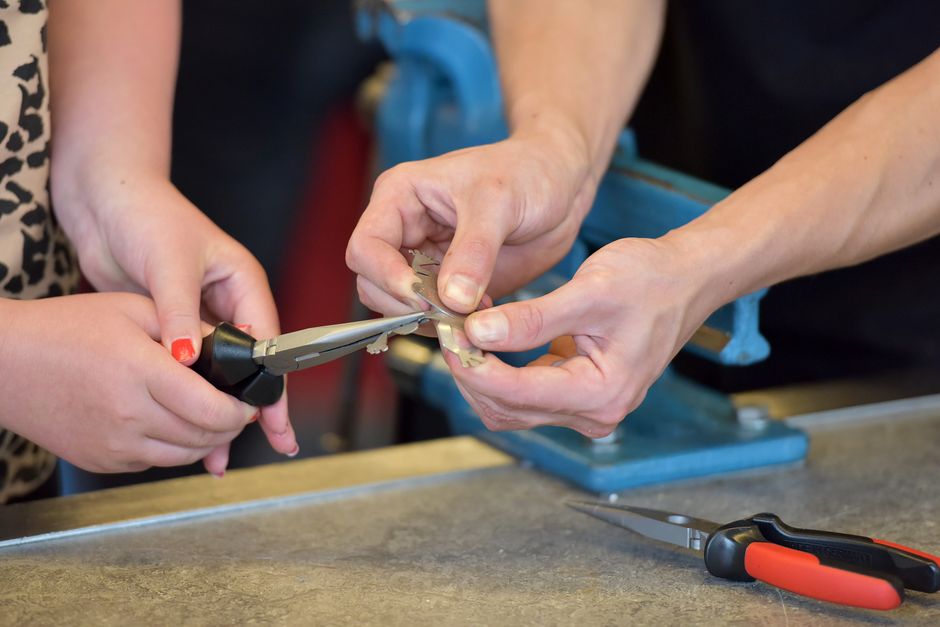
When shaping wire handles, precise bends without kinks are key. Parallel-action pliers excel here: they hold the wire firmly and apply equal pressure across the gripping surface, producing consistent, smooth bends. This reduces microfractures in the wire that can become stress points.
Side cutters for safe wire cuts
Never underestimate the quality of your side cutters. Cheaper cutters can create ragged edges, which lead to dangerous wire ends poking through fabric or hands. A sharp, well-aligned side cutter makes clean shears and minimizes fraying or snap points.
Pro tip: Always wear gloves when cutting or bending wire to protect fingers from sharp ends or sudden snaps.
Reinforcing Weak Materials Before Drilling
Reclaimed packaging components—like thin cardboard, paperboard, or lightweight plastics—often don’t handle drilling or load-bearing well without reinforcement. Here’s a step-by-step to reinforce weak spots before installing handles, especially wire:
- Add an interfacing 90 g/m2 layer: Iron-on or sew-in interfacing inside the tote wall where the handle will mount strengthens the material by distributing stress.
- Use washer reinforcement: When screwing or riveting wire loops or webbing ends, place small washers behind the mounting point to spread load evenly, preventing sudden puncture tears.
- Drill precise holes: Pre-drill pilot holes slightly smaller than your screws or rivets with a sharp bit to avoid ragged edges that turn into cracks.
- Consider comfort padding tube: If using webbing, slide a padding tube over the handle for ergonomic support.
Think of these steps like preserving the binding and hinges on a favorite library book—it keeps handling safe and smooth over time.
Comparing Wire vs. Webbing for Tote Bag Handles
Criteria Wire Handles Webbing Handles Load Capacity Good with 16-18 AWG steel wire; sensitive to bends and anchoring quality Excellent; distributes weight evenly with less stress on fastening points Comfort Hard on hands without padding; risk of poking from sharp ends Comfort padding tube options prevent digging; soft and flexible Durability Prone to fatigue if bent repetitively; risk of sudden breaks Resists fraying/damage; lasts long, especially when reinforced Aesthetics Industrial, minimalist, vintage appeal Classic, casual, versatile look Tools Required Parallel-action pliers, side cutters, gloves Basic sewing tools; optionally, padding tubes and reinforcement washersFinal Verdict: When to Choose Wire or Webbing
If your tote bag will carry light to medium loads (roughly 10-15 pounds or less) and you’re confident in precise shaping and reinforcement, wire handles offer a fun, resourceful upgrade. Just remember to choose thicker gauge steel wire (16-18 AWG), shape with parallel-action pliers, cut cleanly with side cutters, and reinforce mounting points rigorously.
However, if Type III 550 paracord ultimate comfort, load capacity, and durability are your priorities, especially for thicker https://daisydustmaid.com/what-comfort-radius-fits-average-hands-for-a-wire-handle/ or heavier totes made from delicate reclaimed materials, webbing is your go-to. Add interfacing 90 g/m2 inside, use washers for reinforcement, and slide on comfort padding tubes for roomy hands and safe trips to the market.
Bonus Tips for DIY Tote Bag Makers
- Test your handles: Before final assembly, test wire handles with incremental weights to detect weak spots.
- Watch drill tolerances: When drilling holes in reclaimed materials, aim for plus or minus 1 mm tolerance around screws or rivets to prevent accidental tears.
- Avoid flimsy floral wire: No matter how pretty, it’s not load-bearing enough for tote bags—think of it as bookmarks, not shelves.
- Safety first: Cap or file down any exposed wire ends; use heat-shrink tubing or tape to cover sharp points.
Wrapping It Up
Choosing between wire and webbing handles depends largely on your bag’s purpose, load expectations, and aesthetic preference. Both can be sustainable and sturdy with the right preparation and tools. Think of your tote as a small personal library: each handle must be a well-crafted spine or strong shelf bracket to keep everything secure and comfortable for frequent use.
With the right wire gauge, tool care (parallel-action pliers and side cutters), and solid reinforcement—plus a pinch of patience—you can turn reclaimed treasures into practical, trustworthy tote bags that carry your world without breaking a sweat.